


Faculty
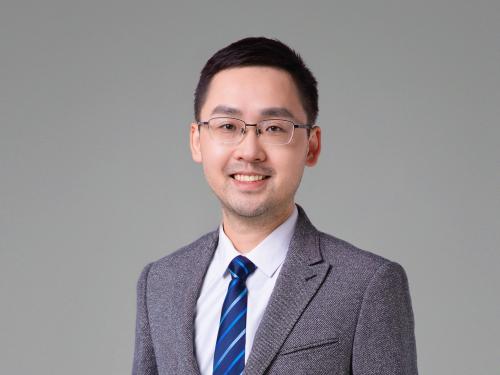
PhD, Hong Kong Univ of Sci & Tech
Associate Professor
Email: wang.r@sustc.edu.cn
Research Interests
◆ Stochastic Optimization in Wireless Systems, Delay-Sensitive Resource Allocation, Robust Cross-layer Optimization with Imperfect CSIT.
◆ Signal Processing in Large-Scale MIMO Systems, Interference Mitigation Technology.
◆ Heterogeneous Networks, Cooperative Communication and Network MIMO, Cognitive Radio.
My current research interests are focused on advances in several promising technologies for future wireless systems. Some of the major research areas are elaborated below.
In the area of cross-layer optimization, my current focus has been put on delay aware control for distributive wireless systems. This topic refers to a joint consideration of PHY layer parameters (e.g., average transmission power) and MAC layer parameters (e.g., average delay) in optimization objective. For instance, to capture the PHY dynamics, one has to rely on information theory and communication theory. On the other hand, to capture the delay dynamics, one has to rely on queuing theory. Integration of the two theories in distributive systems is a great challenge. How to decouple the global system control and how to design the low-complexity and distributive algorithms are the key considerations in this topic.
In the area of signal processing, my focus has been put on two areas of interests. The first one is the interference mitigation techniques for various interference channels. Novel signal processing methods are studied for typical interfering scenarios in this area. For example, algorithms have been proposed to align the quadrature-amplitude-modulated interferes with typical channel coding schemes. The second area of interests is large-scale MIMO. Large-scale multiple antennas may have a significant potential to improve the system throughput or reduce the system power consumption; however, it may also suffer from the huge overhead in channel estimation. Therefore in this area, novel schemes alleviating the pilot contamination problem and the energy-efficient transmission technologies are studied.
In the aspect of applied research, my current focus has been put on two areas. The first one is heterogeneous networks (Het-Net). In 3GPP, Het-Net refers to a novel topology where picocells or femtocells are deployed in the macrocell networks. The issues of inter-cell interference, capacity-limited inter-BS backhaul, high density femtocell/picocell deployment and etc. are investigated in this area. The second research area is the novel architectures for next-generation cellular systems, which include device-to-device communications in cellular systems, cloud radio access network, air interface mitigation (e.g., 3GPP WLAN interworking) and etc.
Biography
Rui WANG received his Bachelor of Engineer Degree in Computer Science & Engineering from the University of Science & Technology of China (USTC) in 2004. In 2008, he obtained the Ph.D. degree in wireless communications at the Hong Kong University of Science & Technology (HKUST). In 2009, he worked as a post-doctoral research associate in HKUST. During 2009-2012, he worked as a senior research engineer at Huawei-HKUST Innovation Laboratory, Huawei Technology, Co., Ltd. He is currently an associate professor in the South University of Science & Technology of China (SUSTC).
Rui Wang has published over 20 papers in top-level IEEE journals and flagship international conferences, including IEEE Transactions on Information Theoy, IEEE JSTSP, IEEE Transactions on Signal Processing, IEEE Transactions on Wireless Communications and etc, and contributed more than 20 patents on wireless systems. In addition, Rui Wang is also the key contributor of 1 IEEE standard contribution which is accepted into the IEEE 802.22 specification.
Honors & awards
Selected Publications
◆ R. Wang and V. K. N. Lau, “Delay-Optimal Two-Hop Cooperative Relay Communications via Approximate MDP and Distributive Stochastic Learning”, to appear in IEEE Transactions on Information Theory.
◆ Y. Cui, V. K. N. Lau, R. Wang, H. Huang and S. Q. Zhang, “A Survey on Delay-Optimal Resource Control for Wireless Systems — Large derivation Theory, Stochastic Lyapunov Drift and Approximate MDP using Distributive Stochastic Learning”, IEEE Transactions on Information Theory, vol. 58, pp. 1677 – 1701, March 2012.
◆ R. Wang, V. K. N. Lau, and Y. Cui, “Queue-Aware Distributive Resource Control for Delay-Sensitive Two-Hop MIMO Cooperative Systems”, IEEE Transactions on Signal Processing, vol. 59, pp. 341-350, Jan. 2011.
◆ R. Wang, V. K. N. Lau, and Y. Cui, “Decentralized Fair Scheduling in Two-Hop Relay-Assisted Cognitive OFDMA Systems”, IEEE Journal of Selected Topics in Signal Processing, vol. 5, pp. 171-181, Feb. 2011.
◆ R. Wang, V. K. N. Lau, and H. Huang, “Opportunistic Buffered Decode-Wait-and-Forward (OBDWF) Protocol for Mobile Wireless Relay Networks”, IEEE Transactions on Wireless Communication, vol. 10, pp. 1224-1231, April 2011.
◆ R. Wang, V. K. N. Lau, L. J. Lv and B. Chen, “Joint Cross-Layer Scheduling and Spectrum Sensing for OFDMA Cognitive Radio Systems”, IEEE Transactions on Wireless Communications, vol. 8, pp. 2410-2416, May 2009.
◆ R. Wang and V. K. N. Lau, “Closed-loop Cross-layer SDMA Designs with Outdated CSIT”, IEEE Transactions on Wireless Communications, vol. 8, pp. 1322-1328, March 2009.
◆ R. Wang and V. K. N. Lau, “Combined Cross-Layer Design and HARQ for Multiuser Systems with Outdated CSIT in Slow Fading Channels”, IEEE Transactions on Wireless Communications, vol. 7, pp. 2771-2777, July 2008.
◆ R. Wang and V. K. N. Lau, “Robust Optimal Cross-Layer Designs for TDD-OFDMA Systems with Imperfect CSIT and Unknown Interference: State-Space Approach Based on 1-bit ACK/NAK Feedbacks”, IEEE Transactions on Communications, vol. 56, pp. 754-761, May 2008.
◆ P. W. C. Chan, E. S. Lo, R. Wang, E. K. S. Au, V. K. N. Lau, R. S. Cheng, W. H. Mow, R. D. Murch, and K. B. Letaief, “The evolution path of 4G networks: FDD or TDD?,” IEEE Communications Magazine, vol. 44, no. 12, pp. 42-50, December 2006.